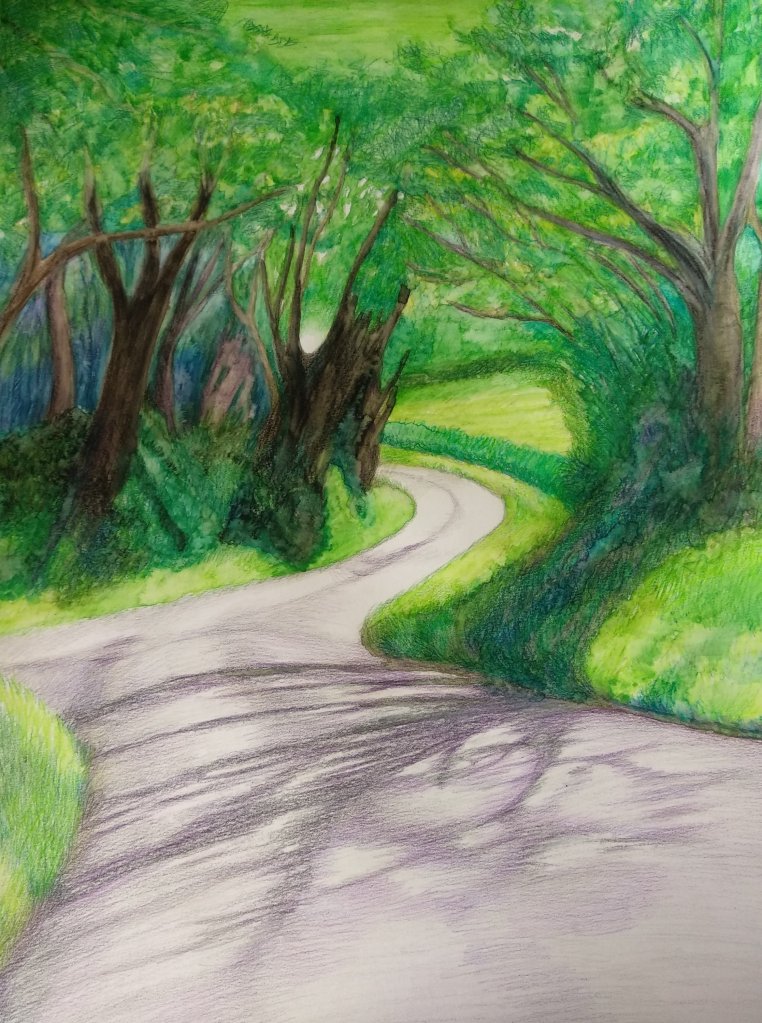
Road

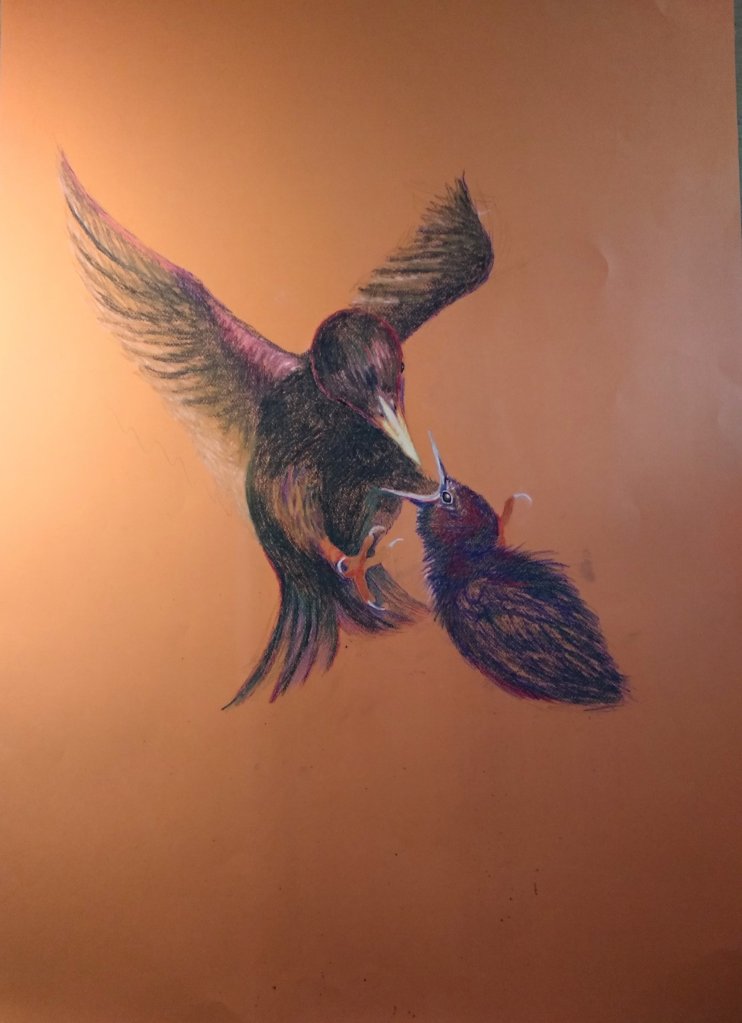
Drawing. Graphite, charcoal and pastels on orange paper.

A few years ago I had a disagreement with some drawing researchers about erasing mistakes. They said all lines are important and should always be kept. I don’t think we were talking about the same kinds of drawings, or if they draw at all.
Yesterday I was drawing with an eraser, adding highlights not removing mistakes. That reminded me of the odd discussion. Today I’ve been moving lettering around. Lots of lines have been changing position. I’m glad I’m not forced to keep all the previous versions as it would’ve been a solid block of lines by now.
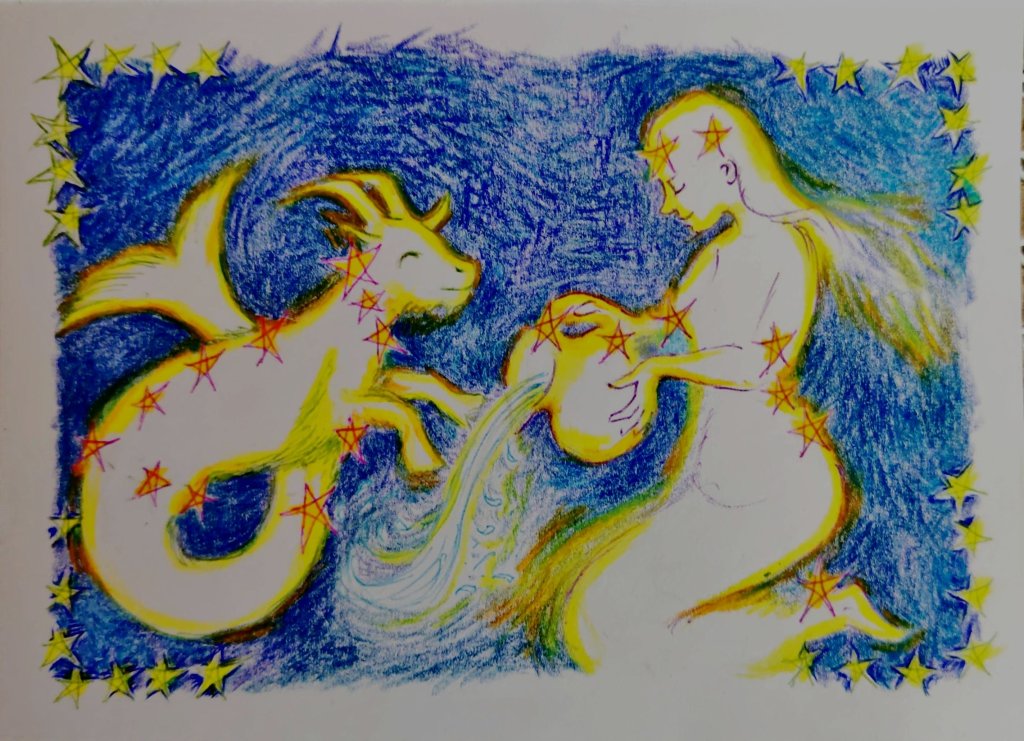
The moon had a yellow orange glow around it the other evening. I thought I’d add a similar line around a drawing. Do the stars dictate our fate? Who can tell?
This is a little drawing, about 9 x 12cm. Various colours of biro and caran d’ache crayons.
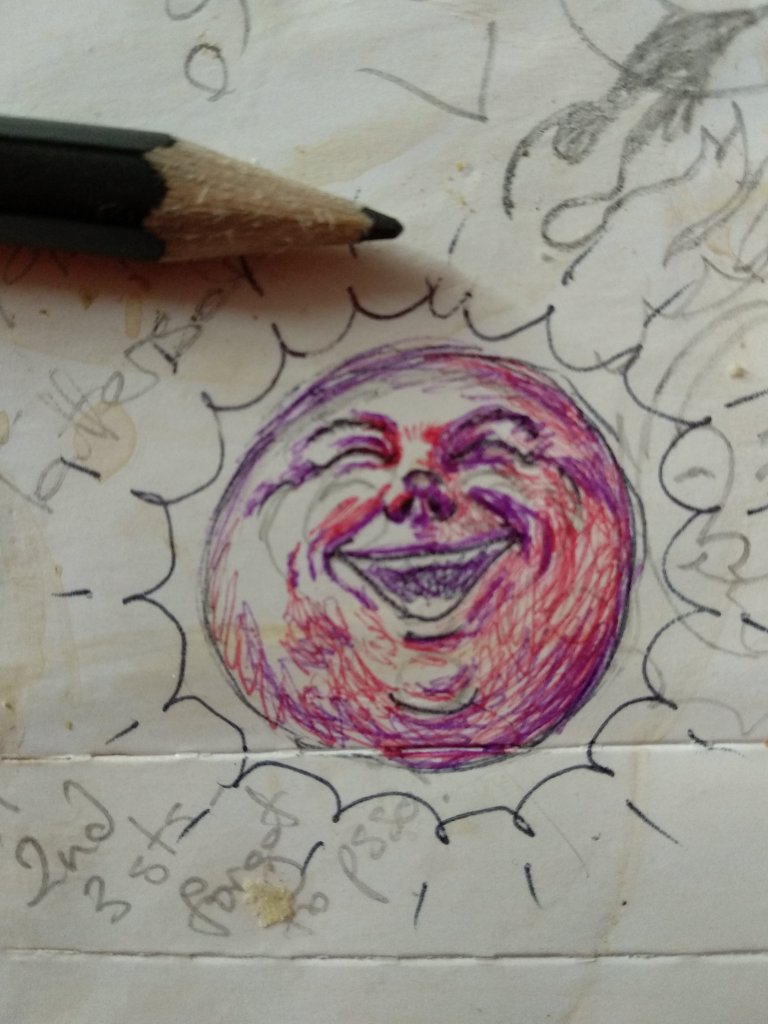
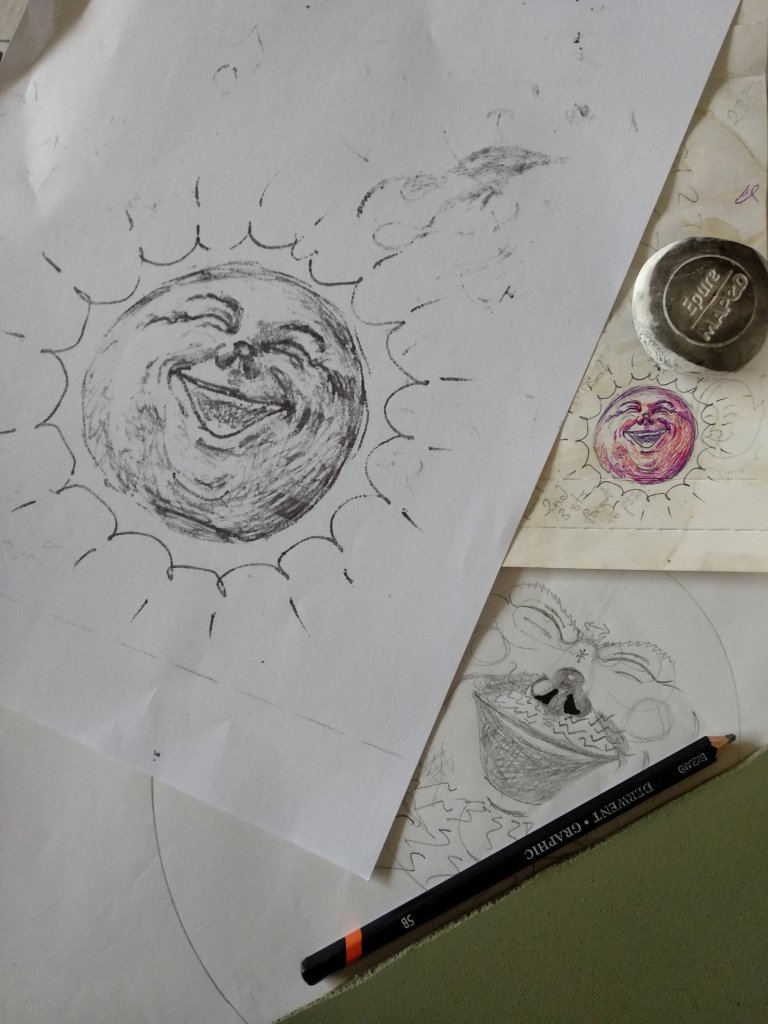
I tried to draw a larger version of my little doodle, it looked too stagnant. Instead, I enlarged the biro drawing by 283%. Much better.
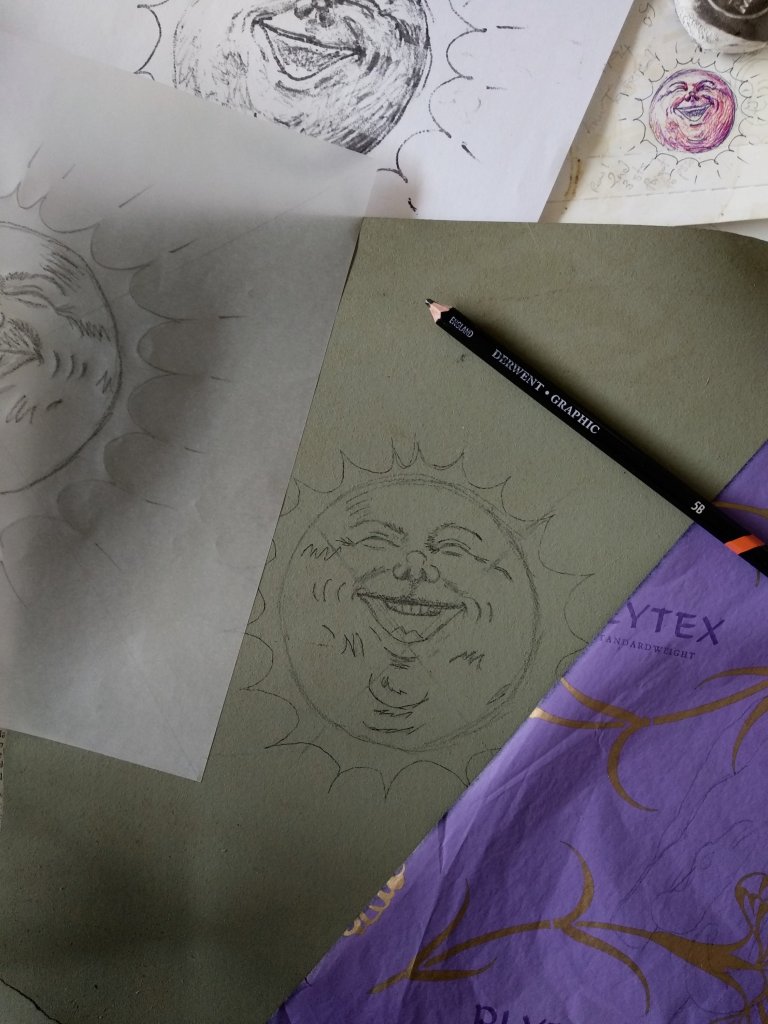
I didn’t plan to make this print, the doodle happened over breakfast. The sun’s face will have a beard made of flames, sparks, leaves, feathers, petals and whatever else comes up.
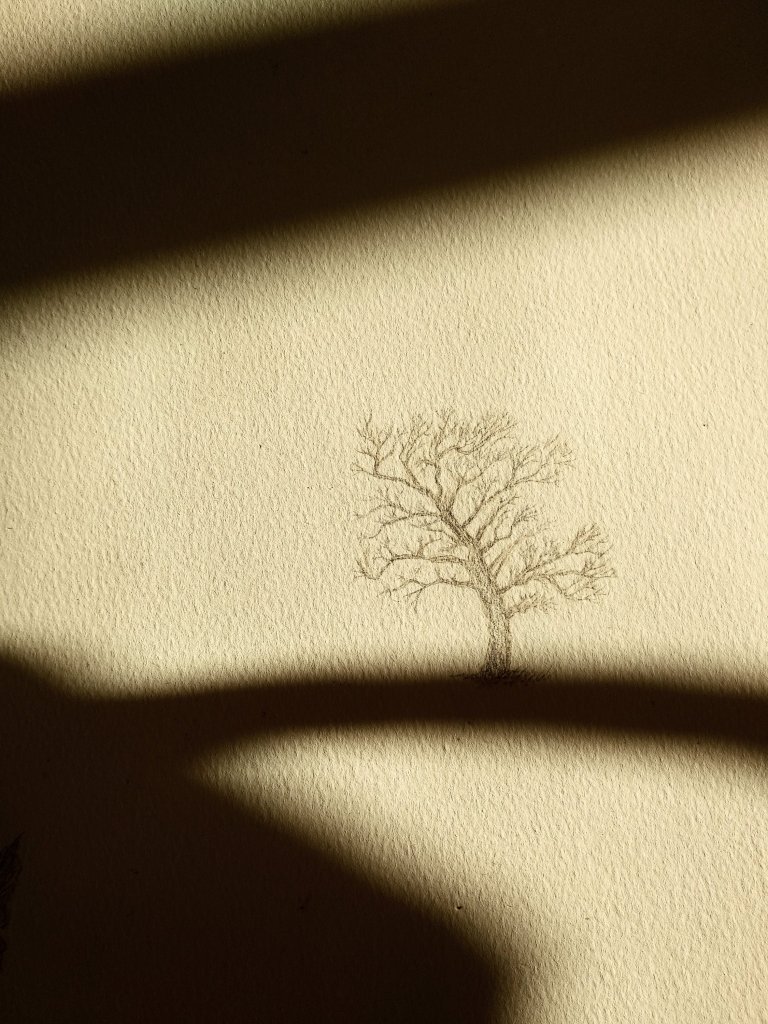
First drawing of 2021 in the shadow of the window frame.
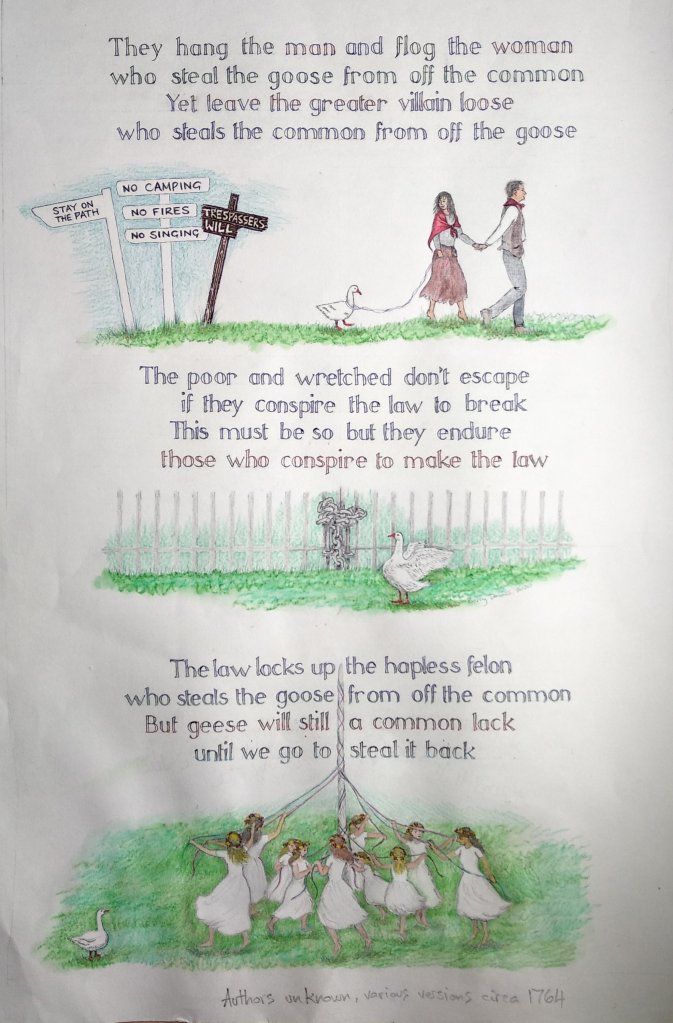
This began as a sketch for a black and white linocut a few years ago. Various interruptions later, it’s been coloured with pencils, biros and watercolour crayons. Not finished yet…
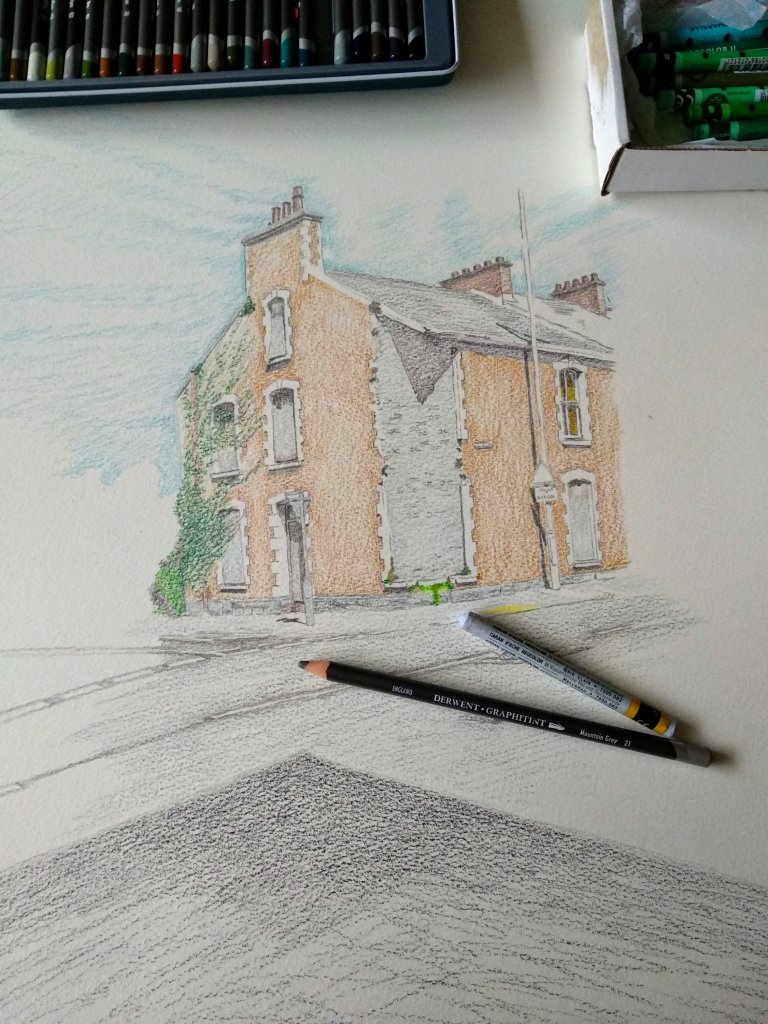
A bit of urban sketching, except it’s drawn from a photo I took on a sunnier day last week.
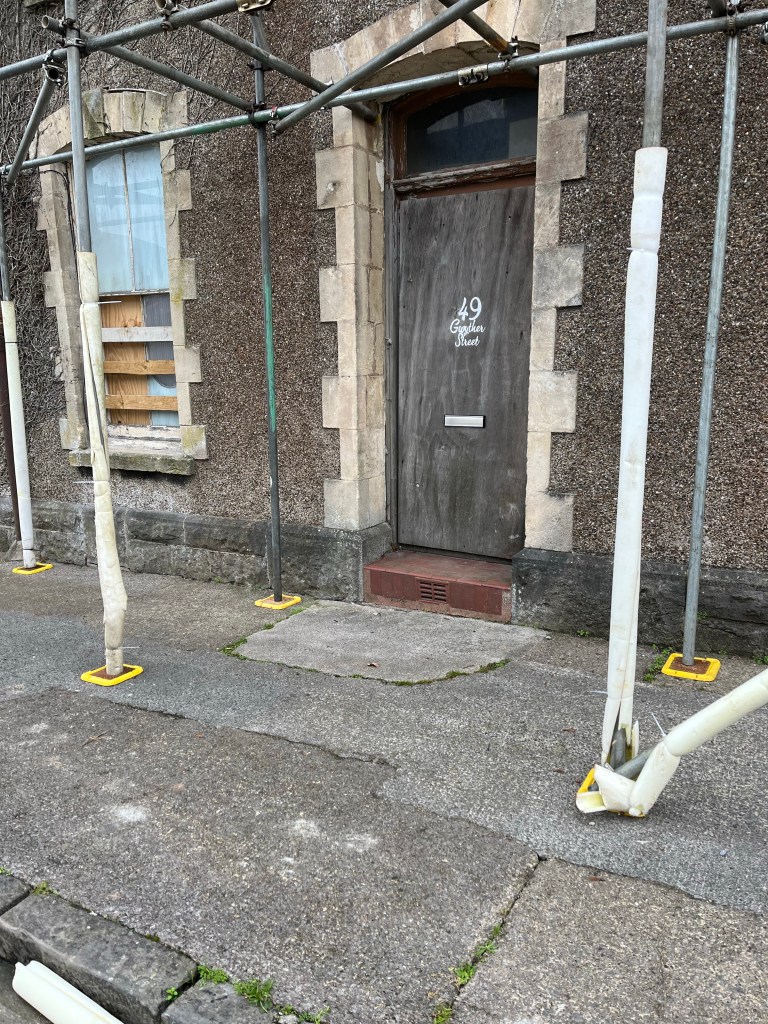
I wonder if others see an attractive corner shop, or maybe a cafe. It might be that people like me, who cannot see the ‘unique’ history of the town I live in, can only see derelict buildings here. Optimists will see the potential for improvement.
This building should be a time travel portal, or at least a gateway to another dimension.
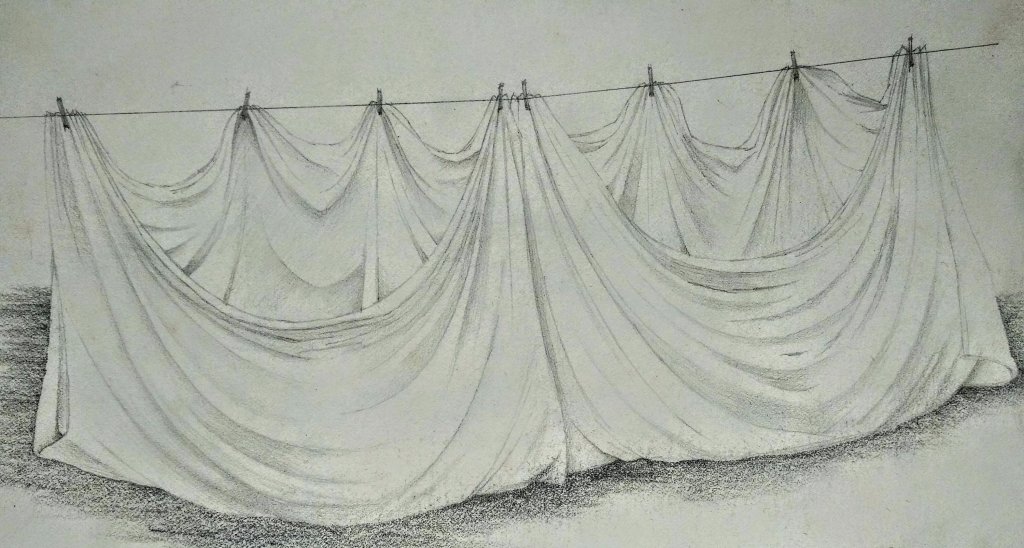
Sorting out the room that could be a studio. Found an old sketchbook. I remember sitting in the garden drawing these sheets.
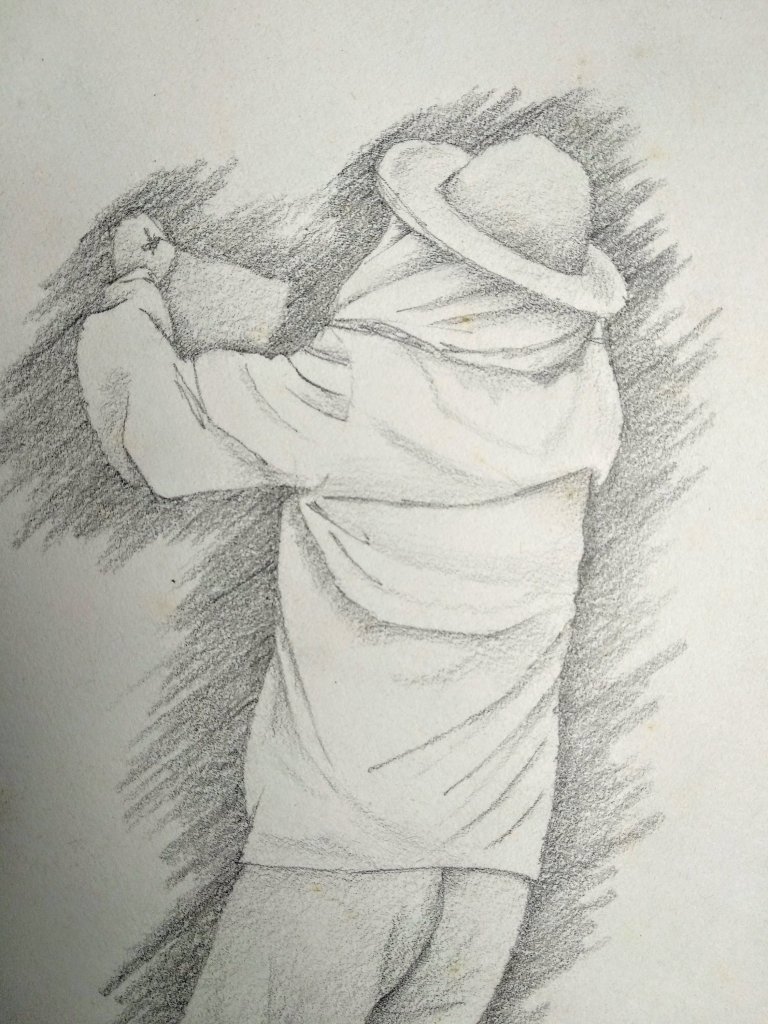
When I was a teenager, a swarm of bees appeared at the end of the garden. The neighbours were very nervous but the bees were only interested in themselves. A beekeeper arrived to collect the swarm. They seemed very pleased to see him, crawling all over his white suit. I had been happily taking photos from underneath the cloud of bees. I wouldn’t have ventured so close to them if I’d known they interacted with humans like that.
 berry daines