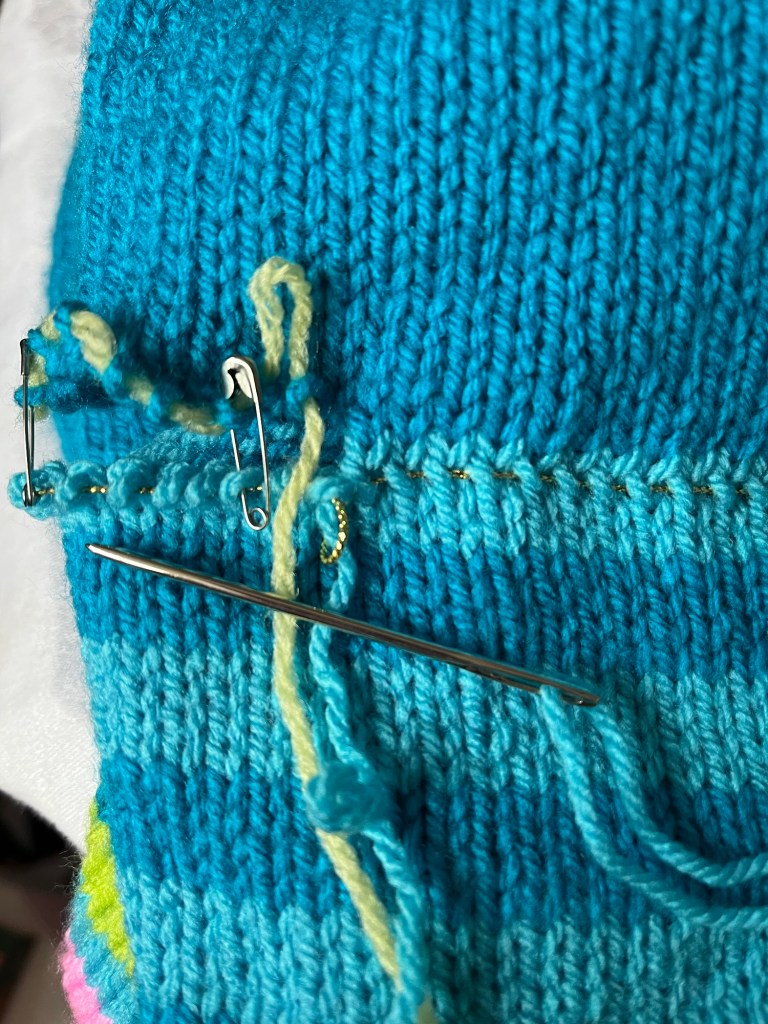
The knitting was measured as it went along, so was my arm. Somehow, the sleeve ended up being long enough to cover my hand as well. All this unravelling and sewing back together must be educational?

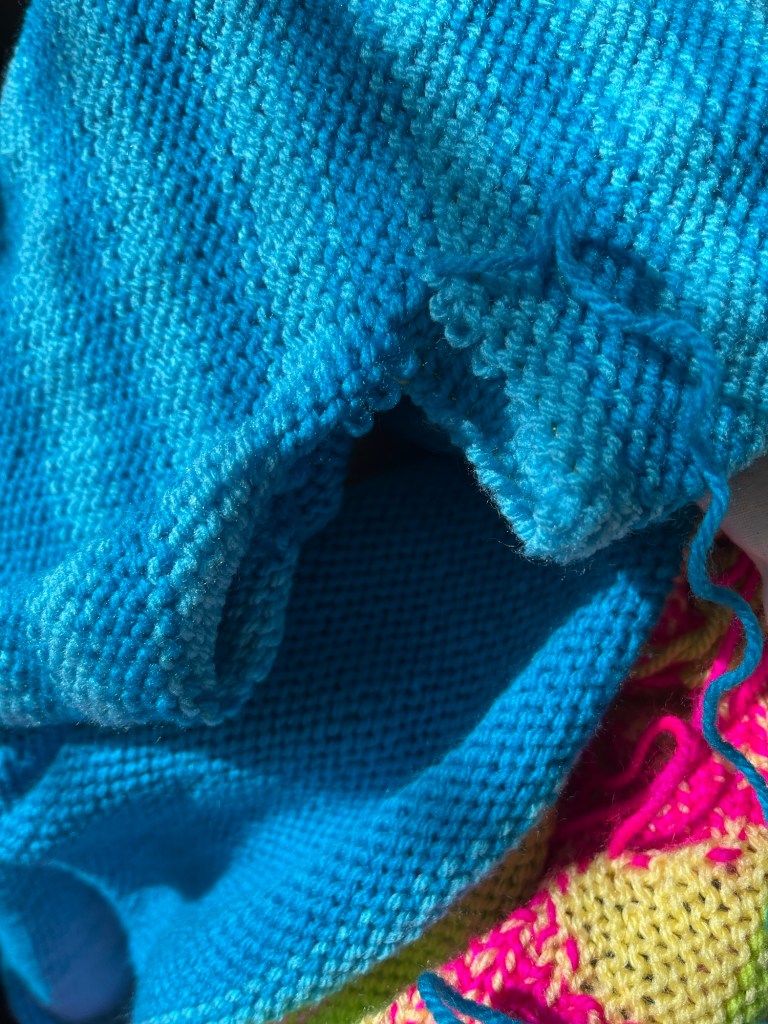
The knitting was measured as it went along, so was my arm. Somehow, the sleeve ended up being long enough to cover my hand as well. All this unravelling and sewing back together must be educational?
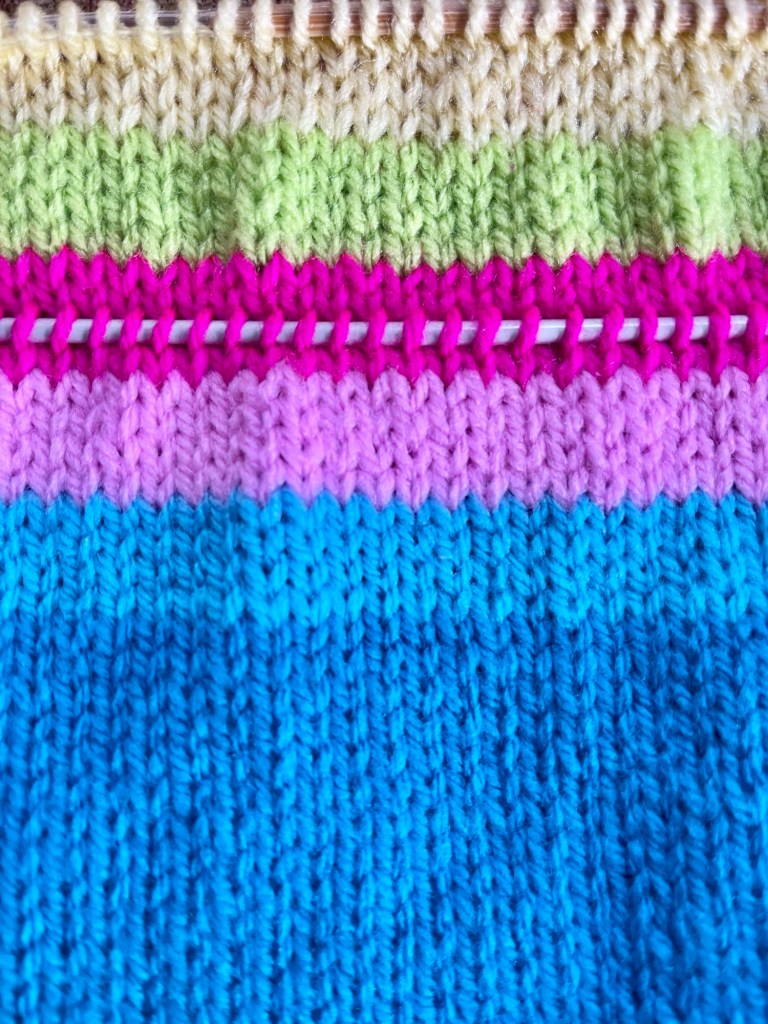
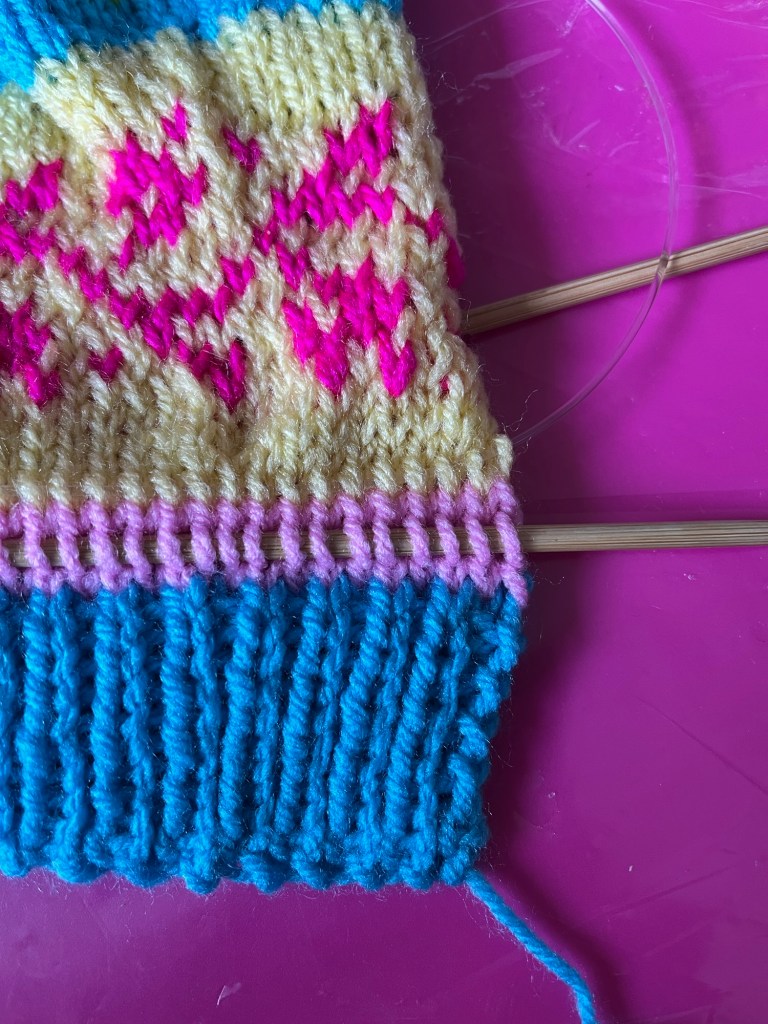
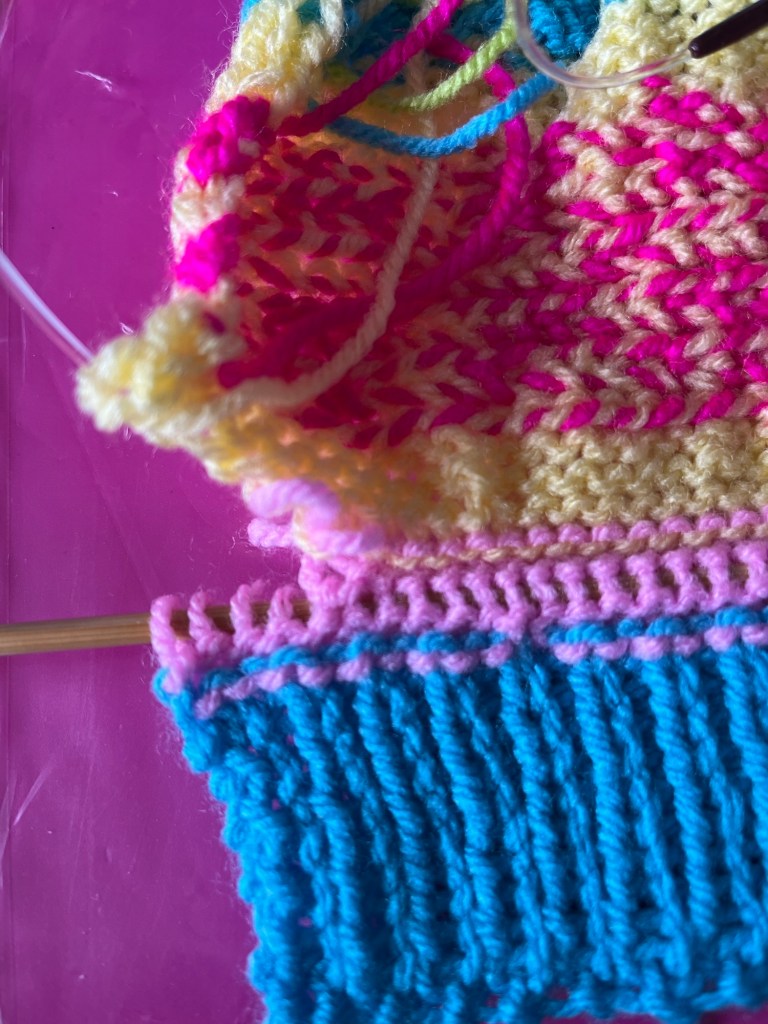
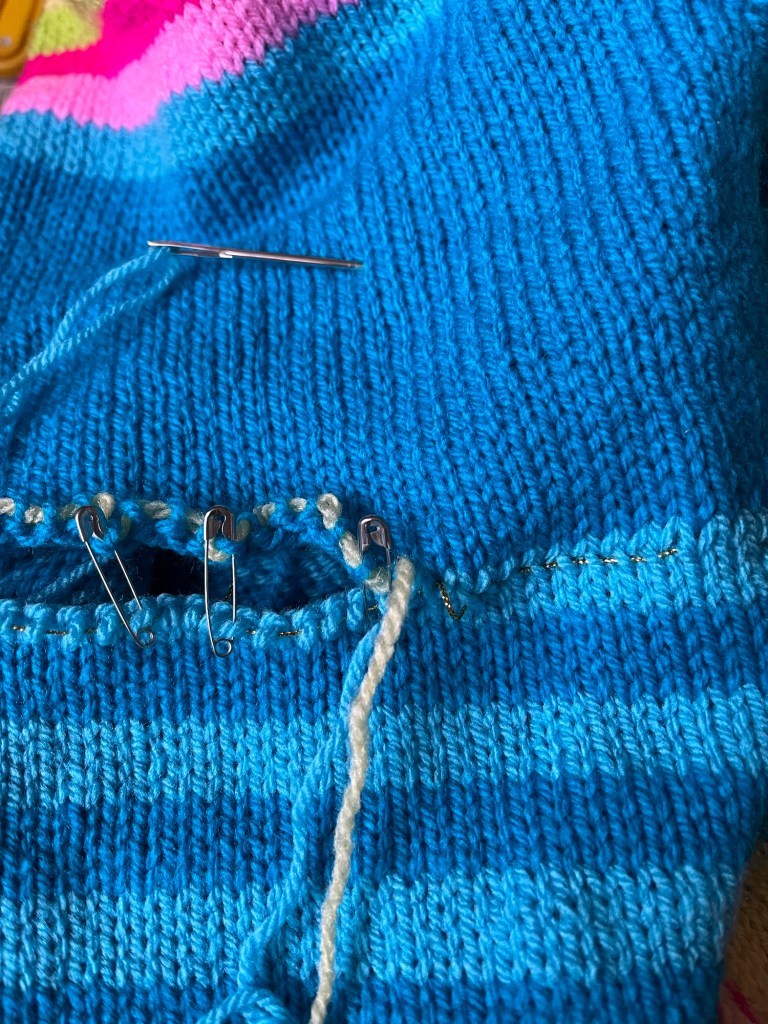
I was pleased with the knitting progress, until I noticed that I should have stopped a few rows ago to shape the neck part. Glad I had a thinner needle to put in to the row before undoing the stitches. Easy to undo everything back to that row, then the pink stitches can go back onto the 4mm needle to continue
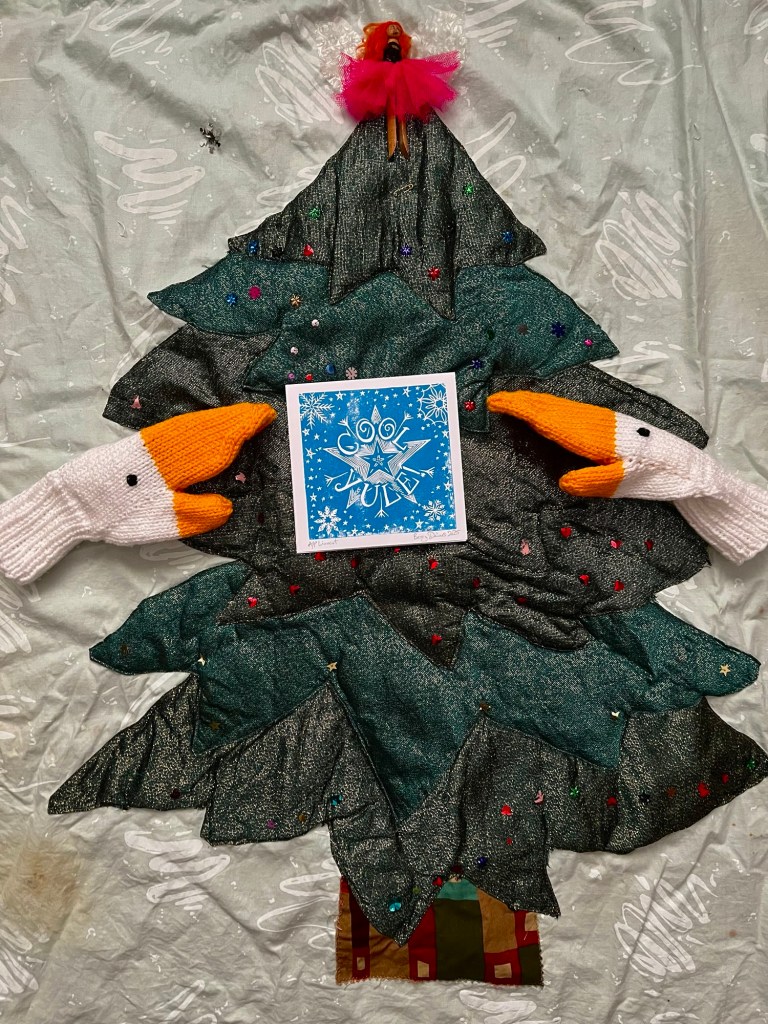
I printed a midwinter card but didn’t send many copies out into the world. Here it is with an appliqué tree from a few decades ago. The knitted geese are made of aran yarn, too thick but the thinner yarns weren’t available in the colours I wanted at the time.
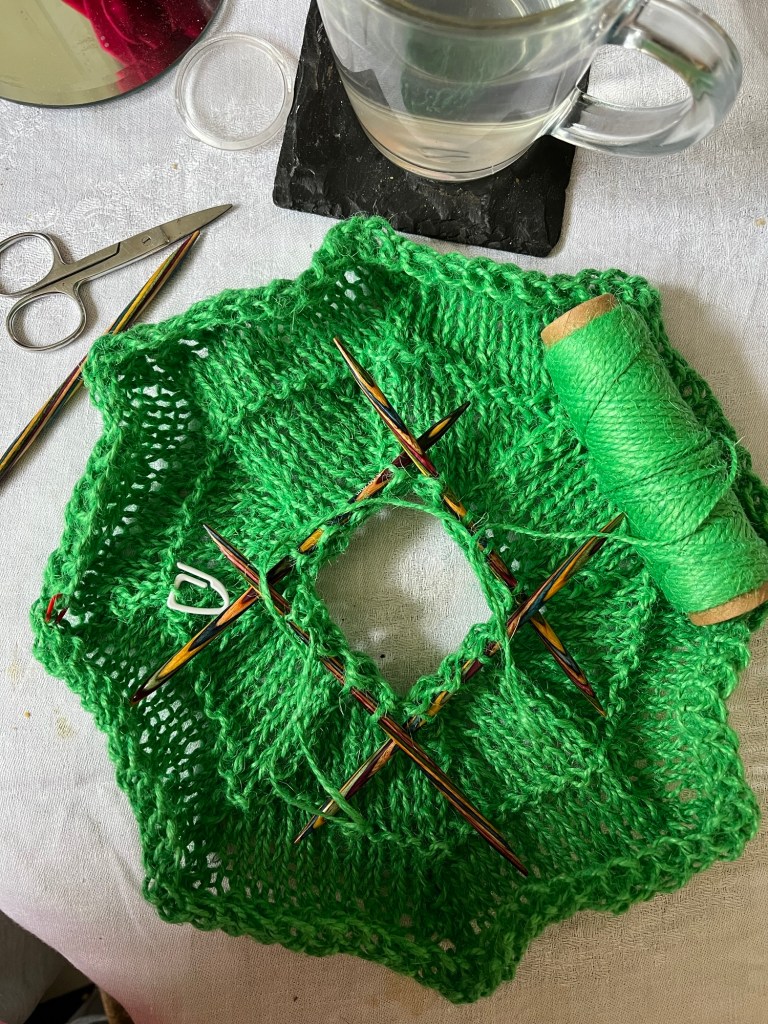
I found a pattern for knitting a flat circle from the centre. Two attempts with jute yarn ended badly. This version was knitted like the top of a beret, decreasing a few stitches every other row.
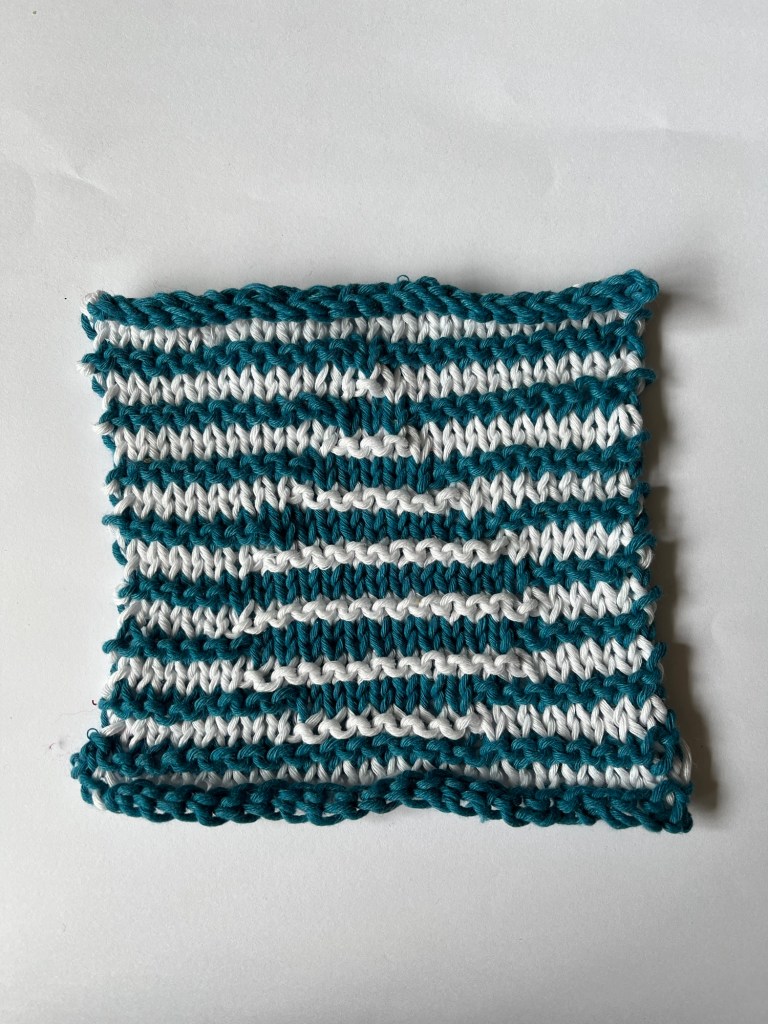
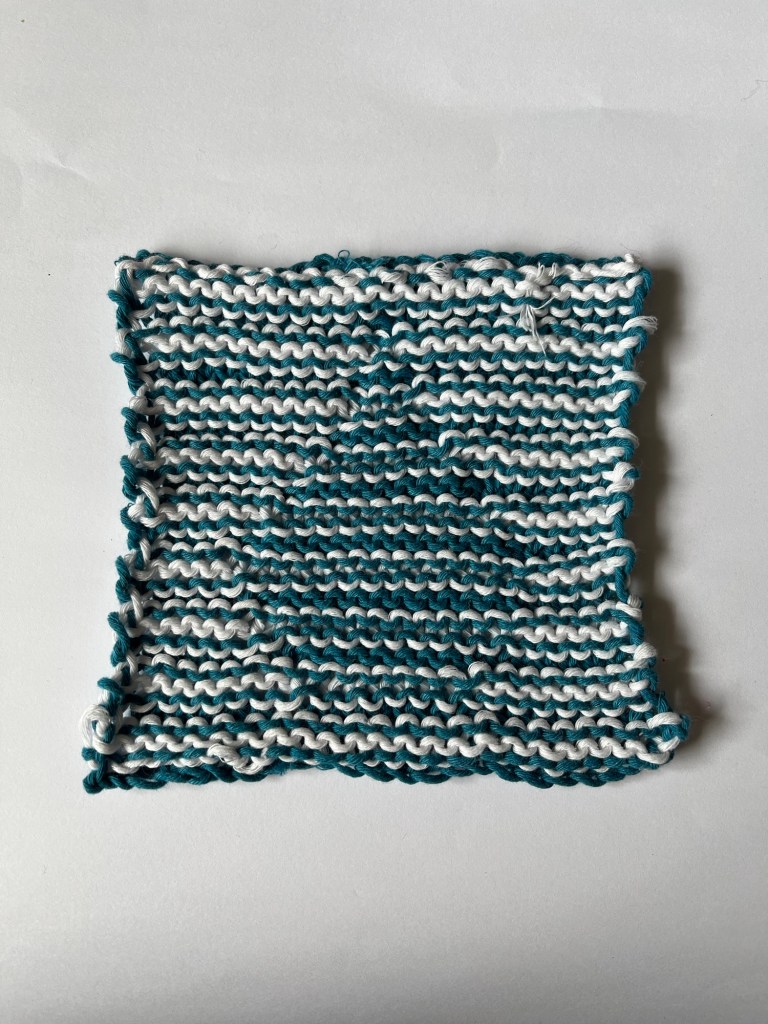
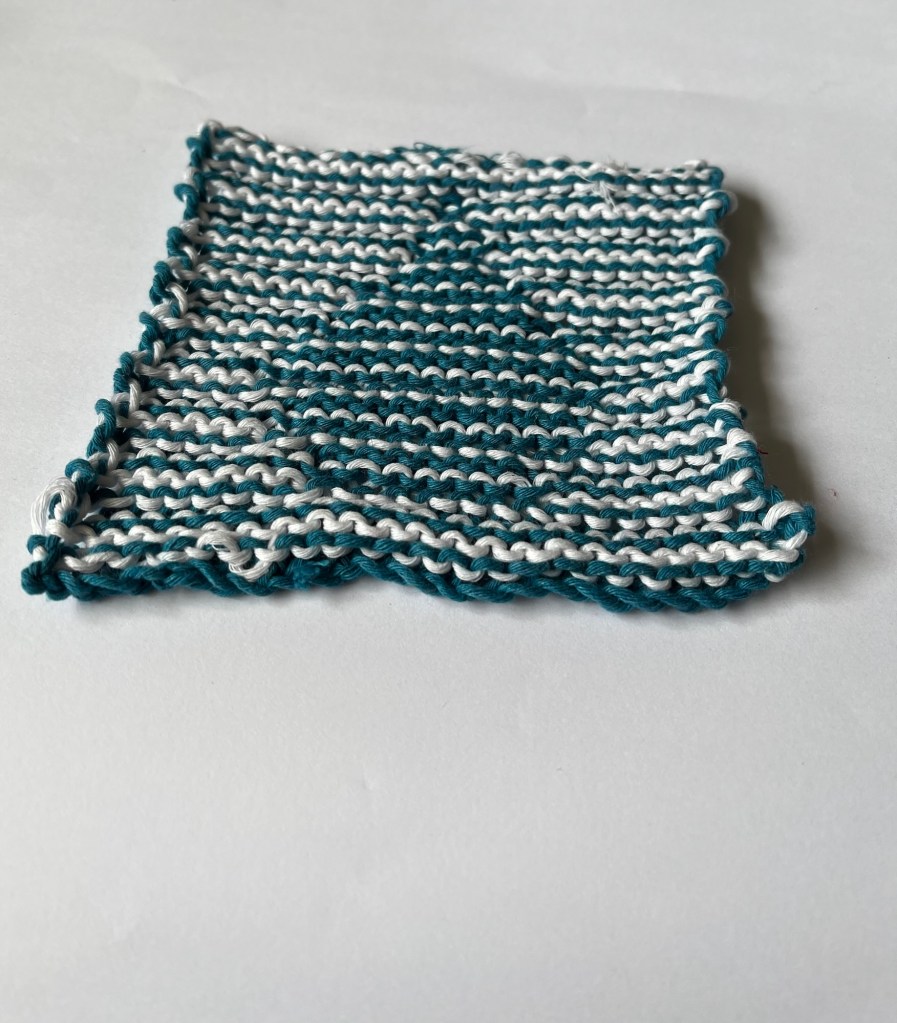
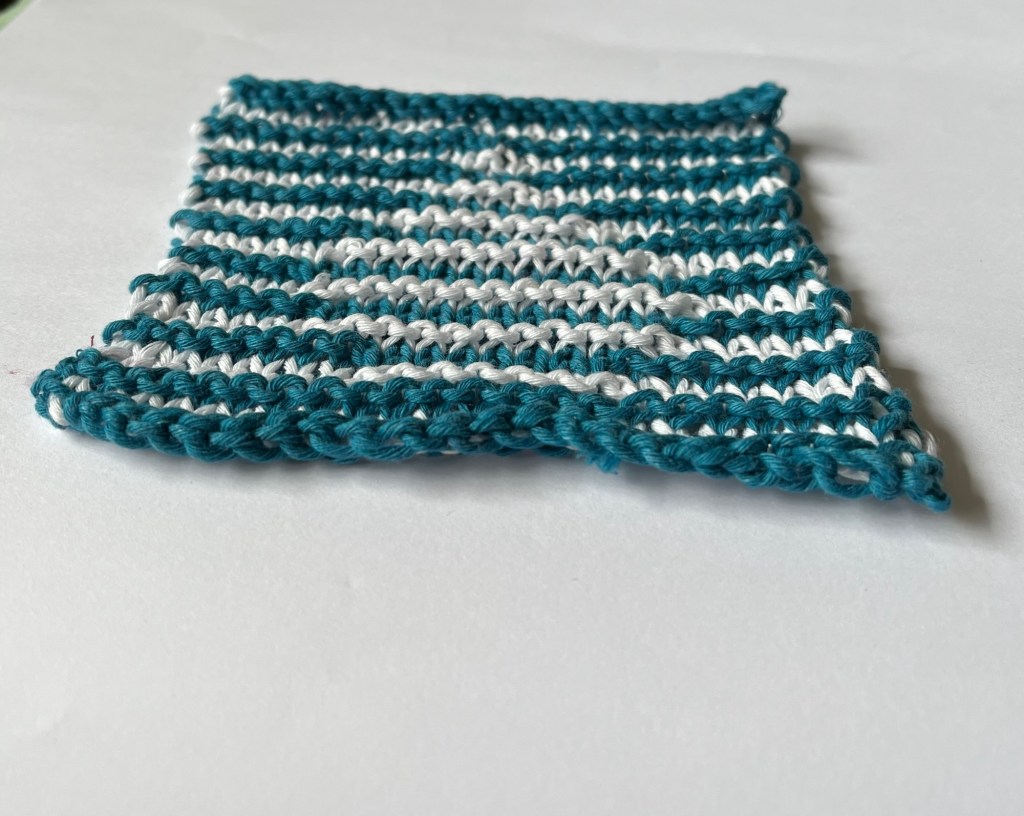
There was a crochet pattern in a recent Water Aid magazine that arrived in the post. The picture looked like a white christmas tree. I wondered if the water drop would work as a knitted illusion. If I’d used the right size needles it might have looked better.
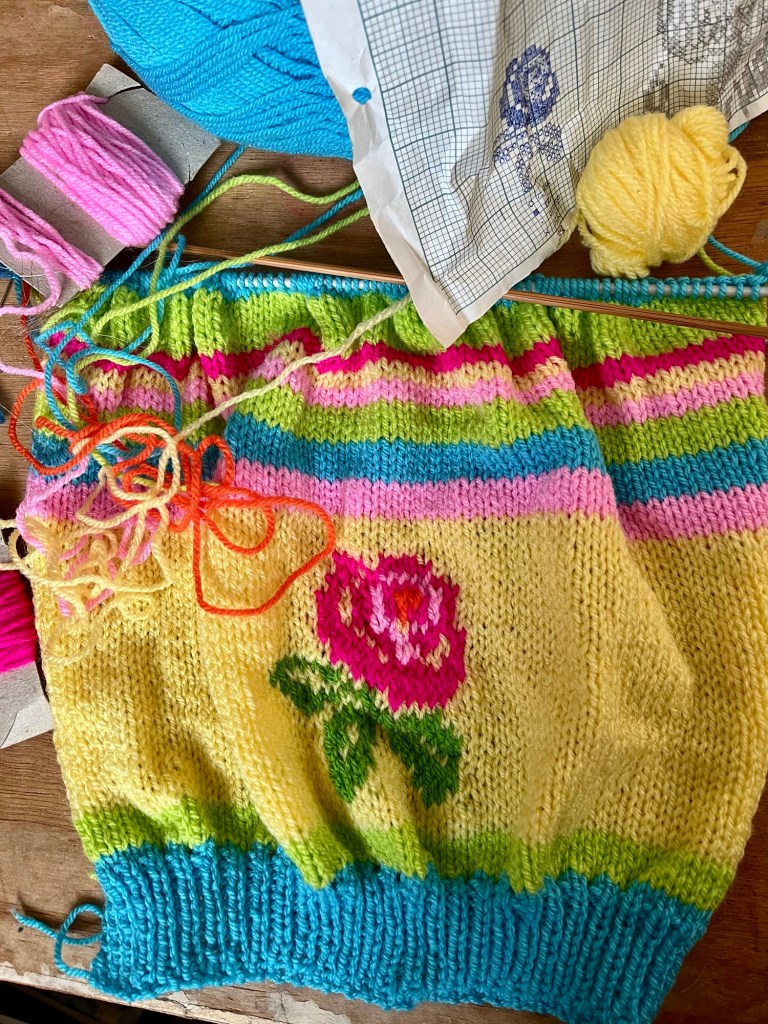
I was pleased with how this sleeve was going. However, it’s using the same pattern as another cardigan I finished a while ago. The sleeves are too baggy.
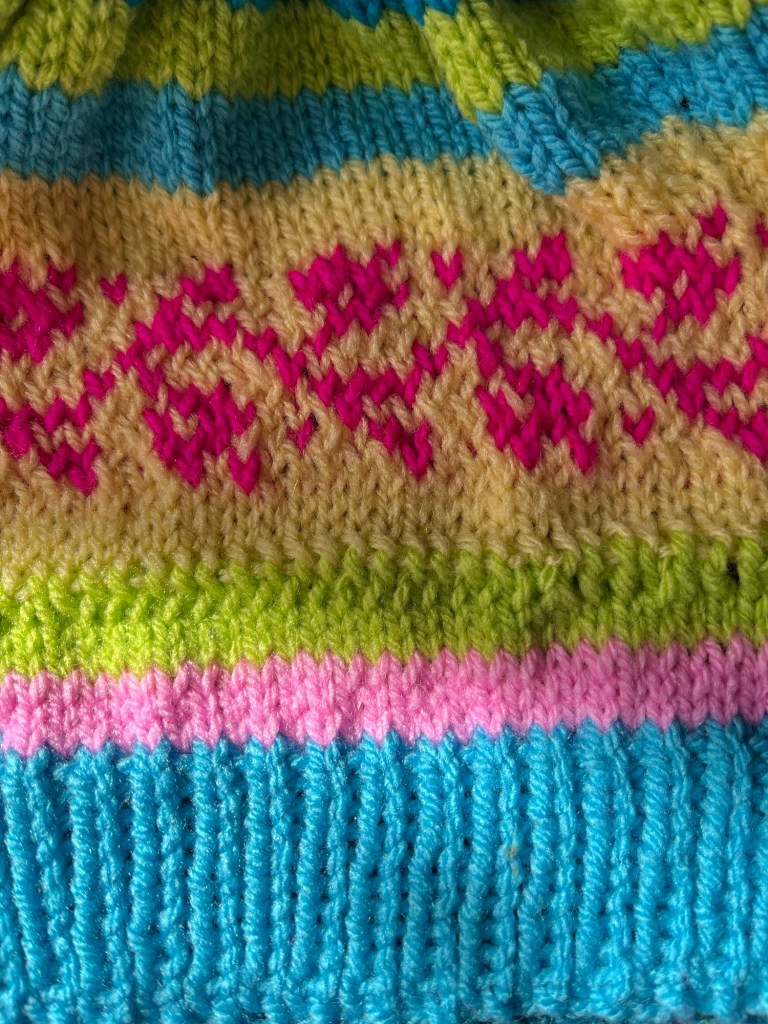
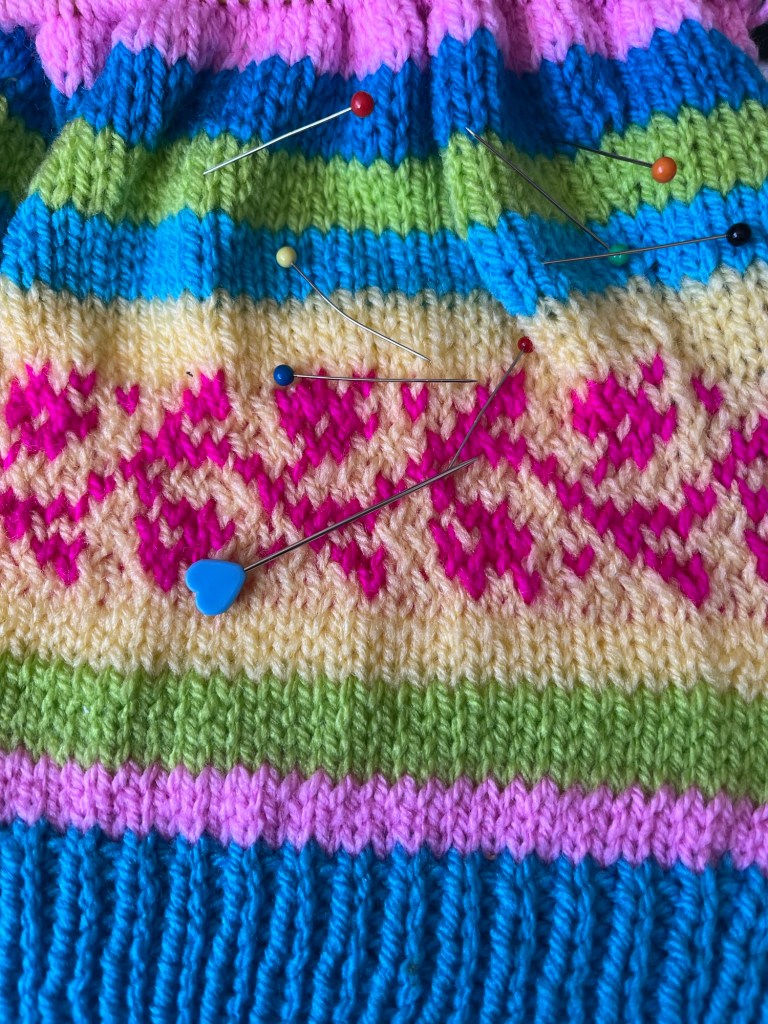
It’s better to unravel this version and start again. The rose chart is from a Prima magazine, which is presumably vintage now.

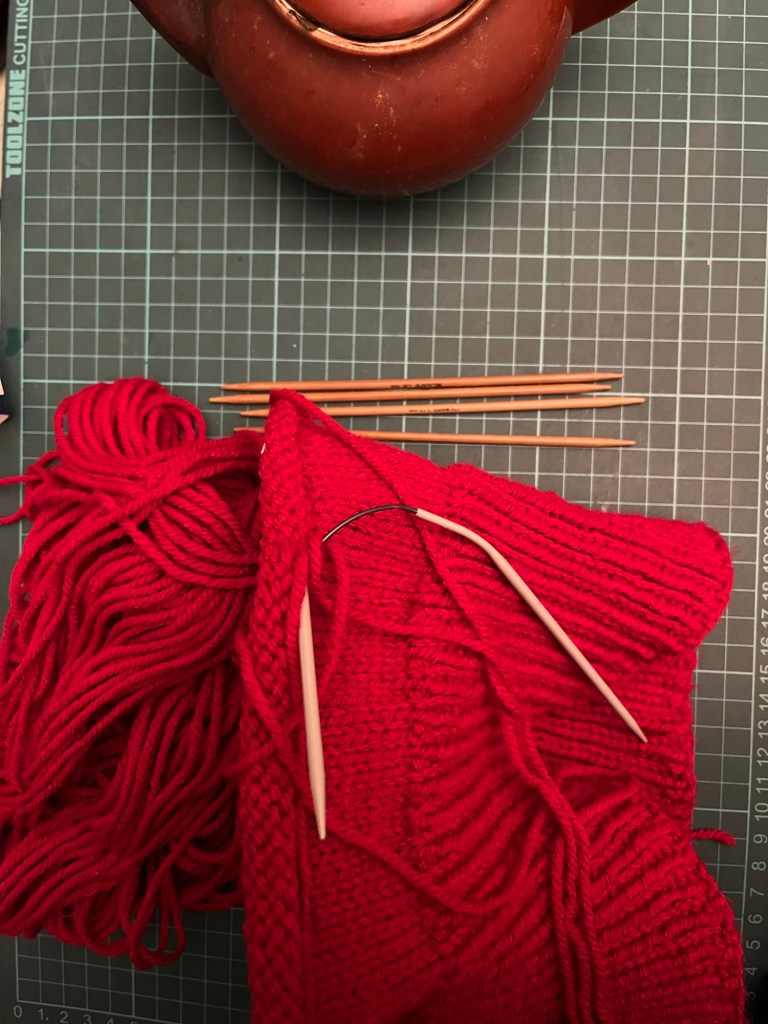
There are many tasks to do today but I knitted instead. The project will become too big for three needles so I’ve added more. They’re slightly bent from being stuck under a heavy item for too long. They still function well.


Sometimes people ask how I made the pattern on the crown of the hat. It’s made (accidentally) by decreasing the number of stitches. Most written patterns say K2tog, knit two stitches together. That gives the hat the ridges as the circle becomes smaller towards the top of the head.
There are other methods. SKPO (slip one stitch onto the right hand needle, knit one then pass the slipped stitch over the knitted one) gives a ridge leaning the opposite way to k2tog. In theory, slipping two stitches knitwise then knitting them together as in the photo above will give a tidier result.
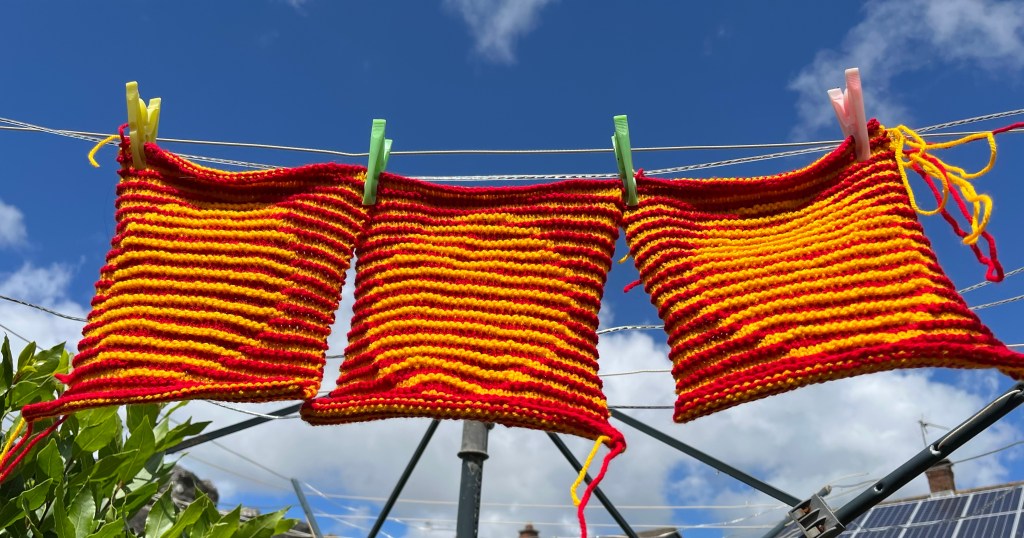
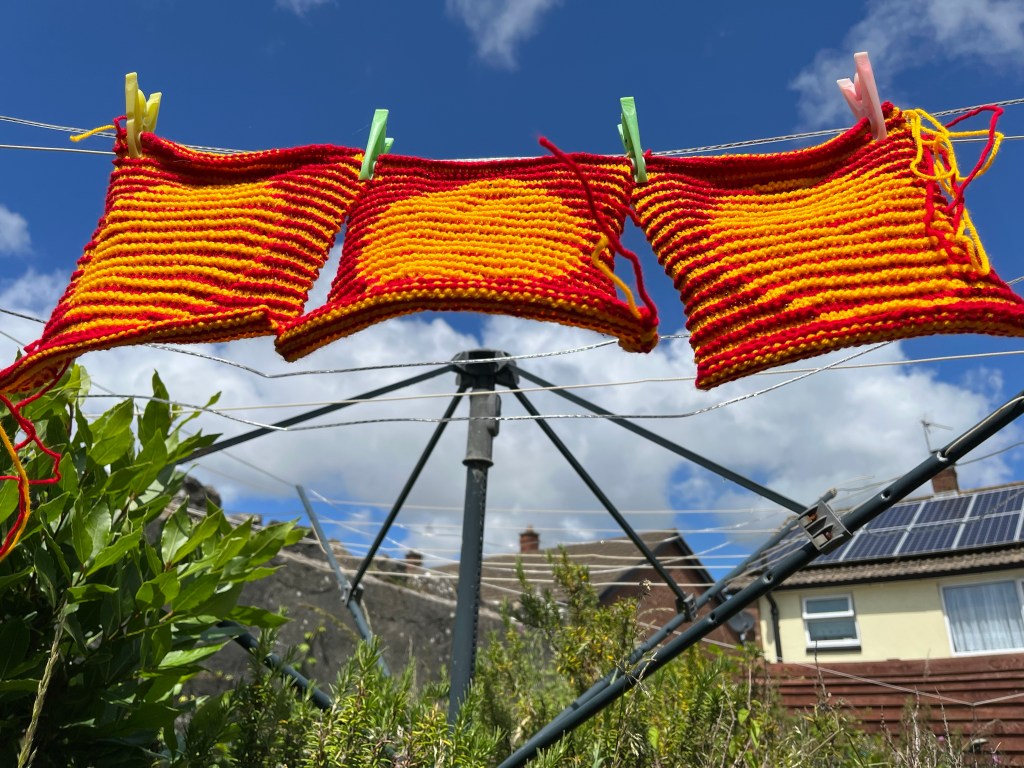
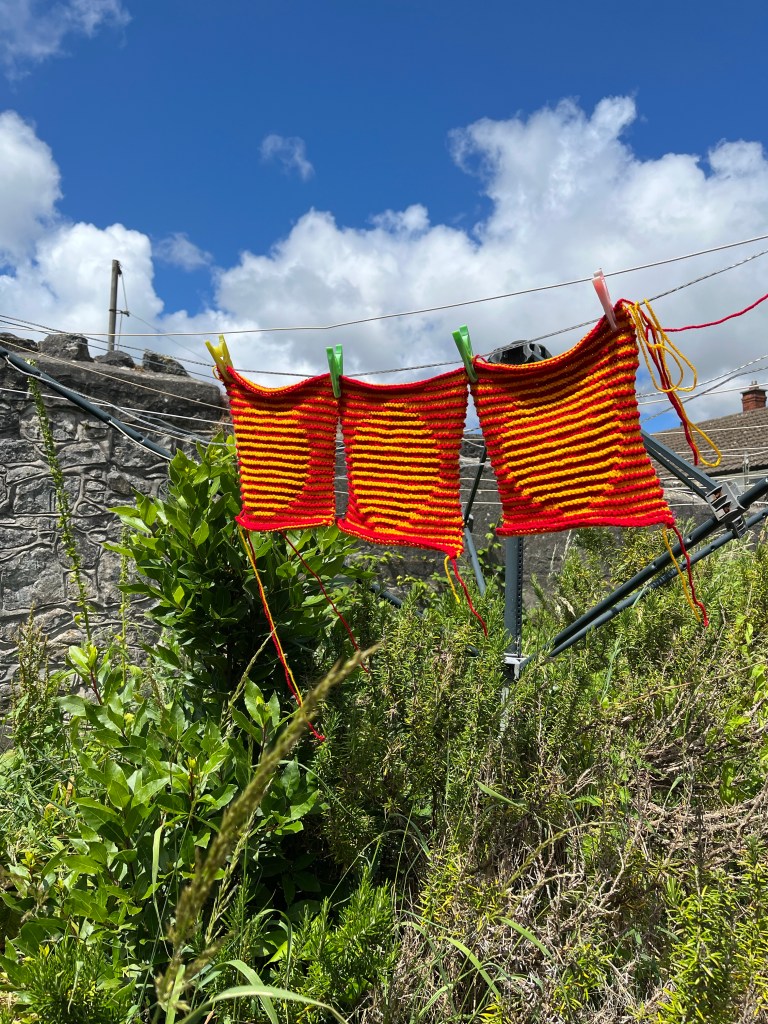
Knitted stripes, or ridges of two rows each. Using dark and light yarns and knit or purl stitches, an illusion of a circle in a square. This is the easiest pattern in an article about illusory knitting, but I like it anyway.
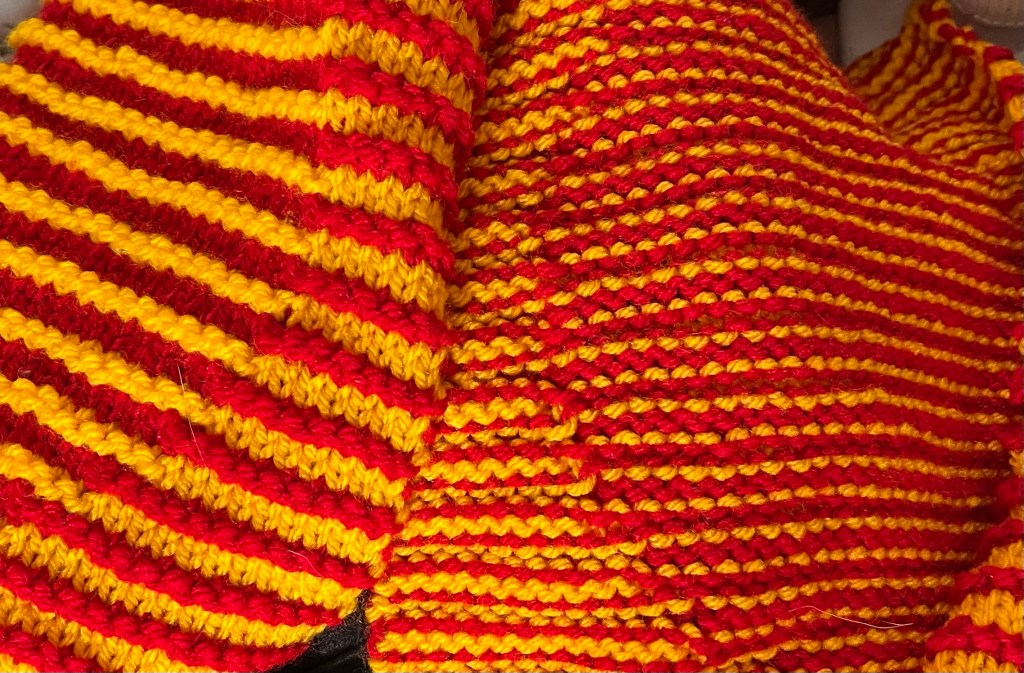
Cameras never lie, mine won’t show the red and yellow stripes in the way they’re visible to me.