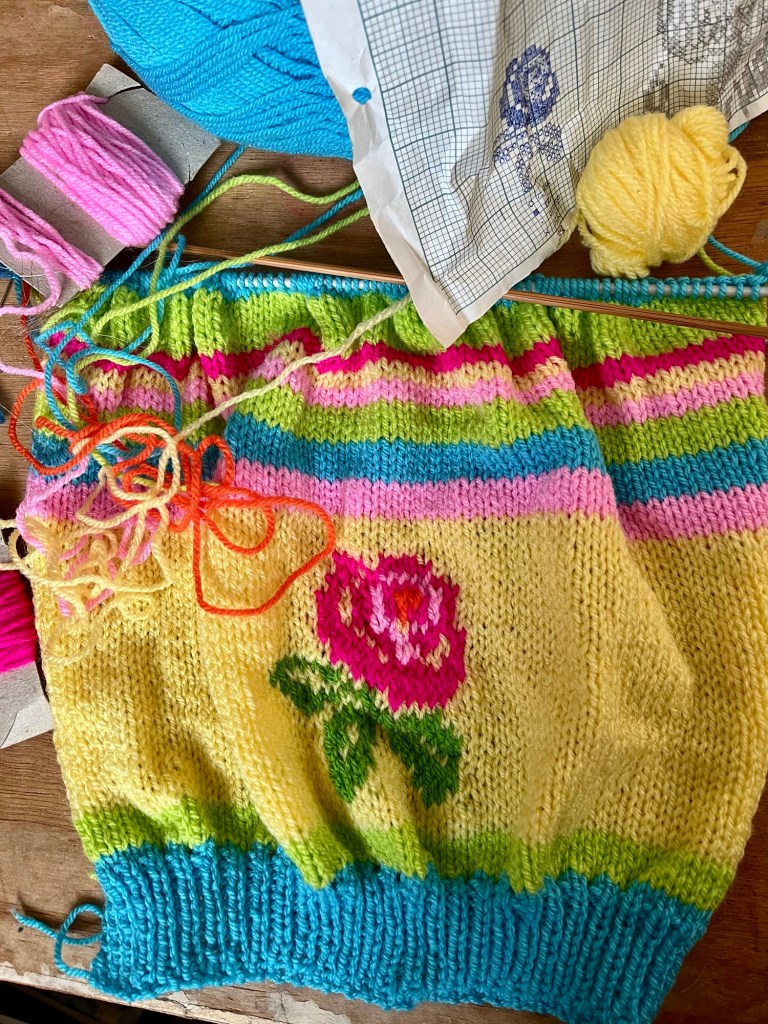
I was pleased with how this sleeve was going. However, it’s using the same pattern as another cardigan I finished a while ago. The sleeves are too baggy.
It’s better to unravel this version and start again. The rose chart is from a Prima magazine, which is presumably vintage now.
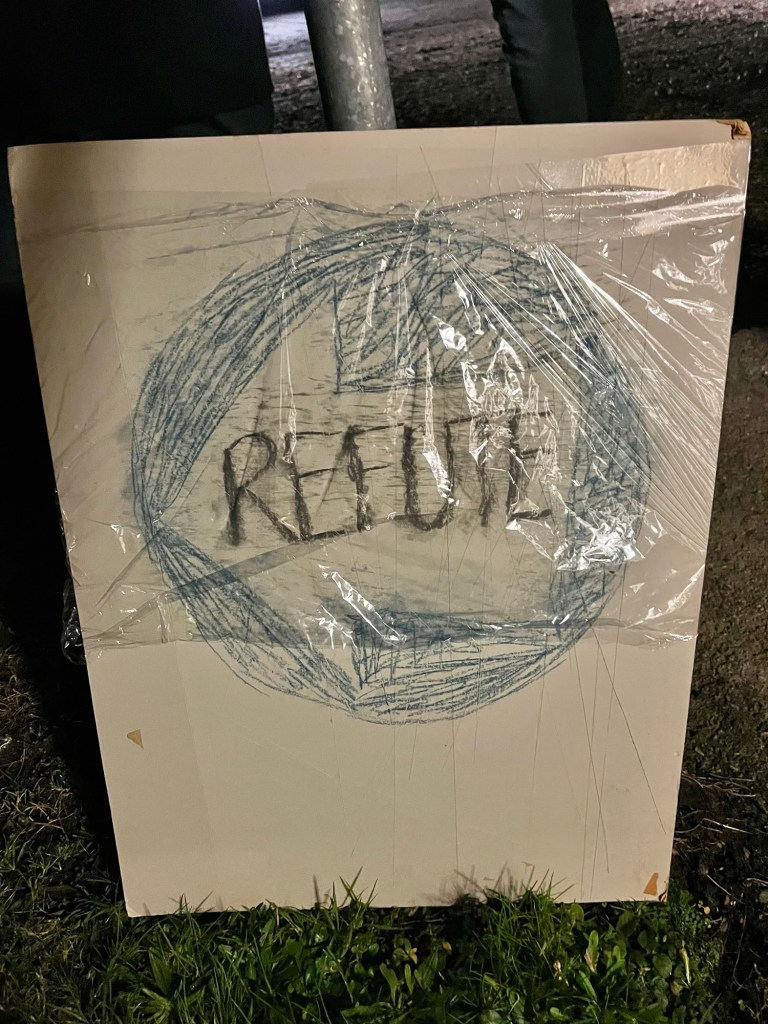
This is the fastest protest sign I’ve ever made. It’s not particularly successful. Nobody will have changed their minds after seeing it.
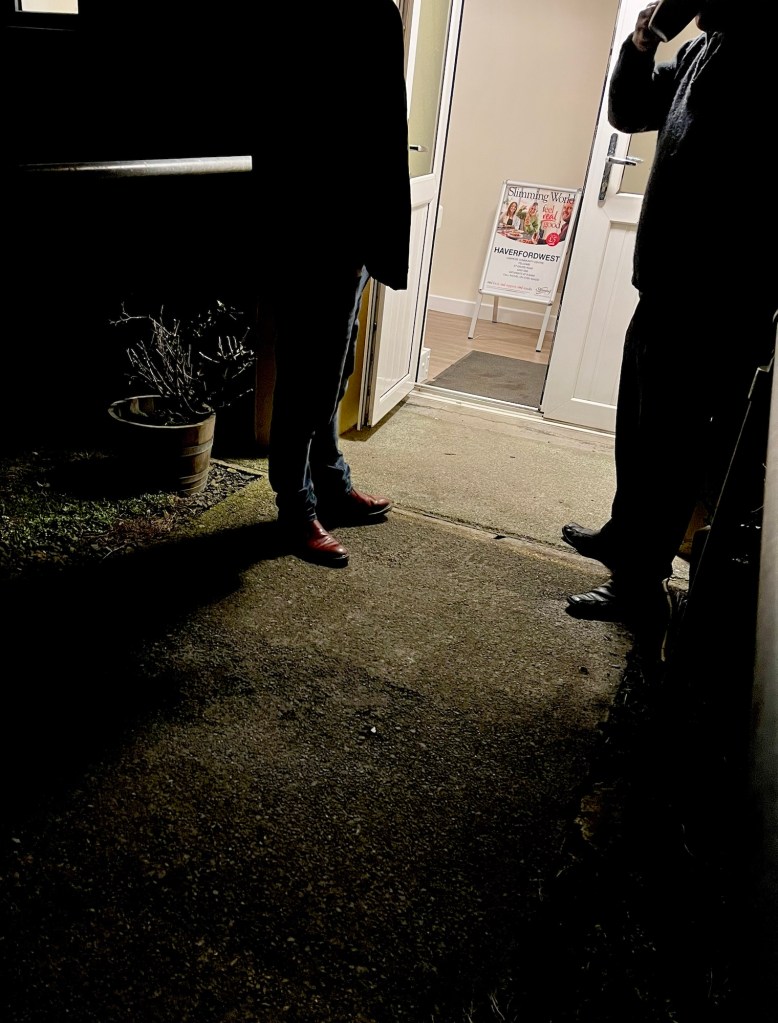
We went to a place where a Reform group was meeting. They’re popular here because voters feel let down by other political parties. The people were mostly friendly on arrival, some were pleased to see protesters. Others were blatantly hostile and are clearly professional narrow minded bigots.
A couple of elections ago there was a chart showing the similarities between seemingly different types of voters. Everyone wants their children to have a better education than they had. Everyone hopes to be in good health, with access to relevant medical care if they become ill. Many people are suspicious of anyone who seems different. Reform fans claim they are not racist but they don’t like incomers. This is often said by people who have retired here from elsewhere.
Slimming World poster
We might have been in the wrong place. It could really have been an evening about eating more salads and stretching the muscles more often.
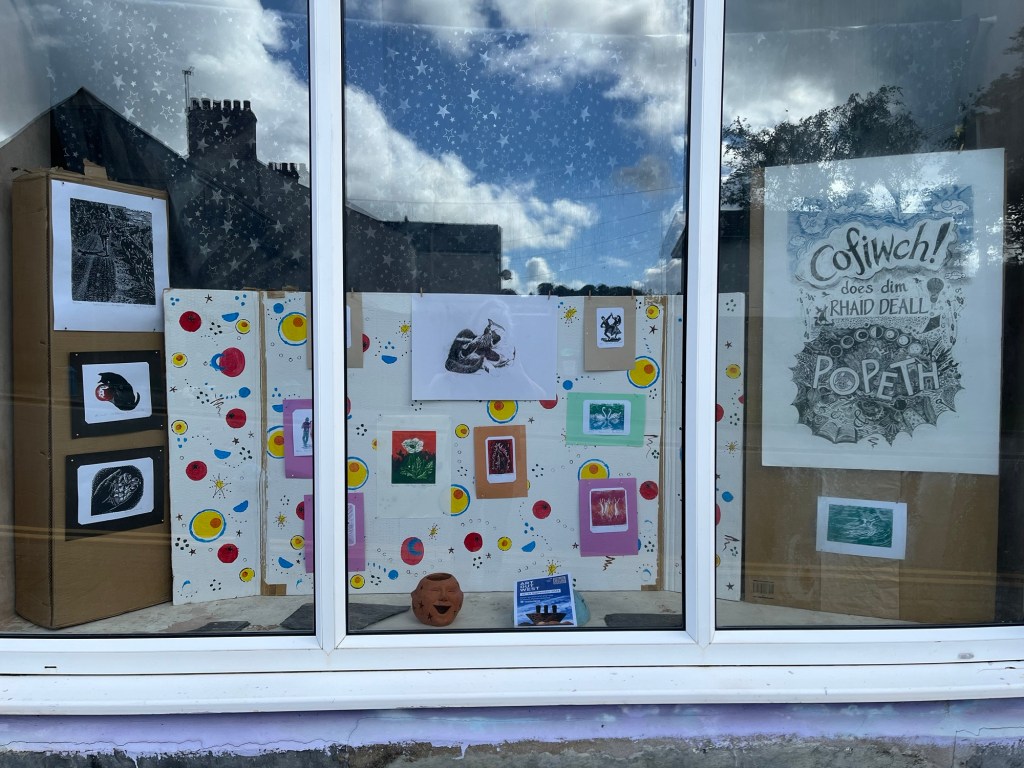
Map of the open studios art trail Small linocuts in a window display
I enjoyed making the background wallpaper for this window display. It’s inspired by a house move when I was about three years old. The new house’s wallpaper was all atomic design; my bedroom had pink and yellow ovals on a grey background. The kitchen was red, yellow and black. That was the first room to be redecorated with pale blues etc, but I preferred the original patterns.
My studio is whichever space is available at the moment, not particularly welcoming for any visitors. Pondering how to put a window exhibition together made me a bit nostalgic for previous studios. The lingering scent of dead pigeons in the roof; tin baths catching the raindrops falling from above. Sharing printing presses with people who left fingerprints on everything(!) There was a lot of admin to help out with in a studio building, the office area was usually warmer so it would be a haven of bustling activity.
There’s also the notion of being a local artist. That’s quite a difficult term, often used as an insult. I’ve lived here for 25 years but I’m not really local. A Radio 4 programme about blood types informed me that I’m part of the same group as some historic invaders. This area is known as ‘The Little England Beyond Wales’, even though the incomers seemed to be Flemish. I’ve never heard any Belgian people chatting around here (so far).
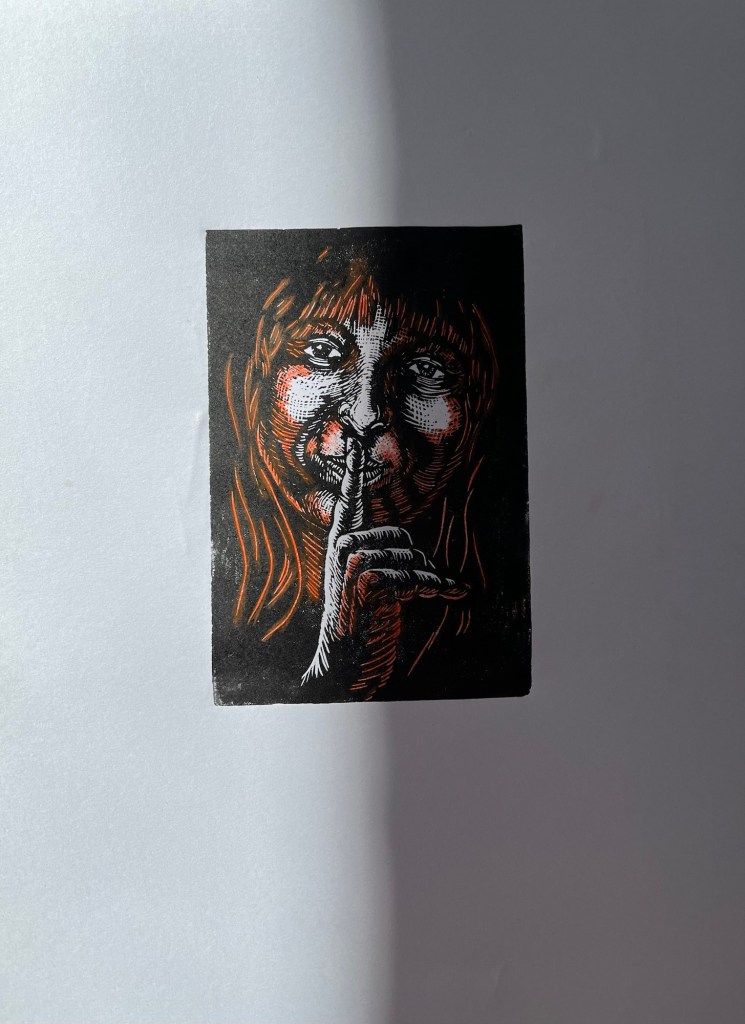
Anyway, these prints gathered together made me realise how many feature hands. Someone asked me if I could draw hands, so I drew a few. Then they asked “but what are linocuts used for?”, so the wallpaper design was to make that clear. What next? I might attempt to put my novel into the right order. It’s about an artist moving to Wales, even though their friends say that’s the same as being dead…
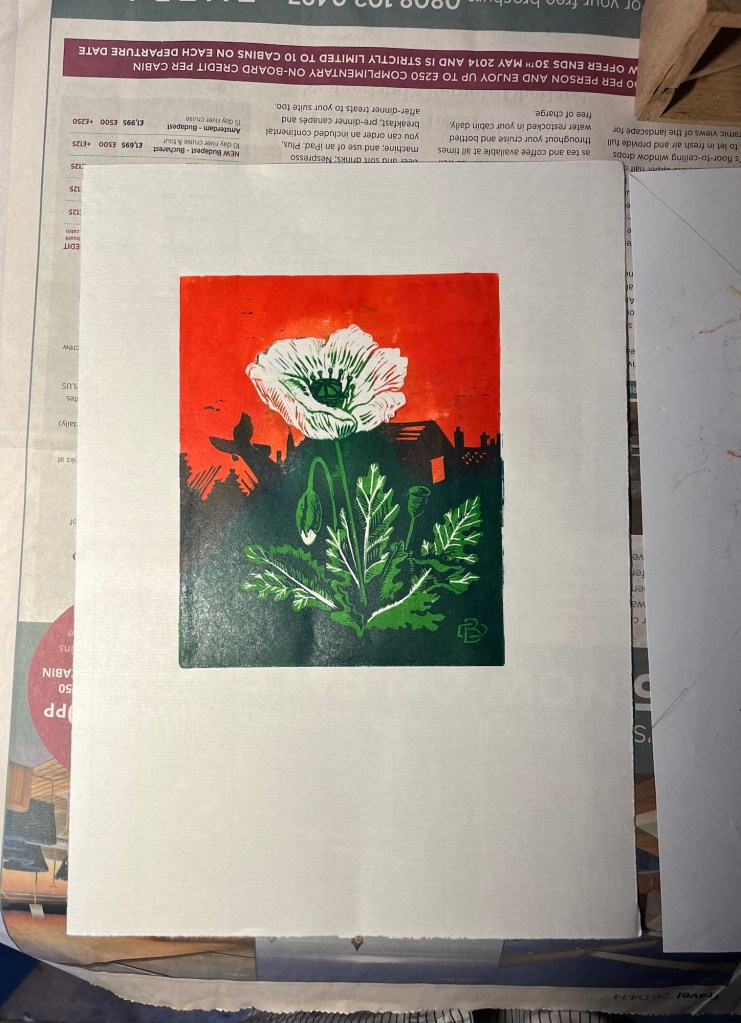
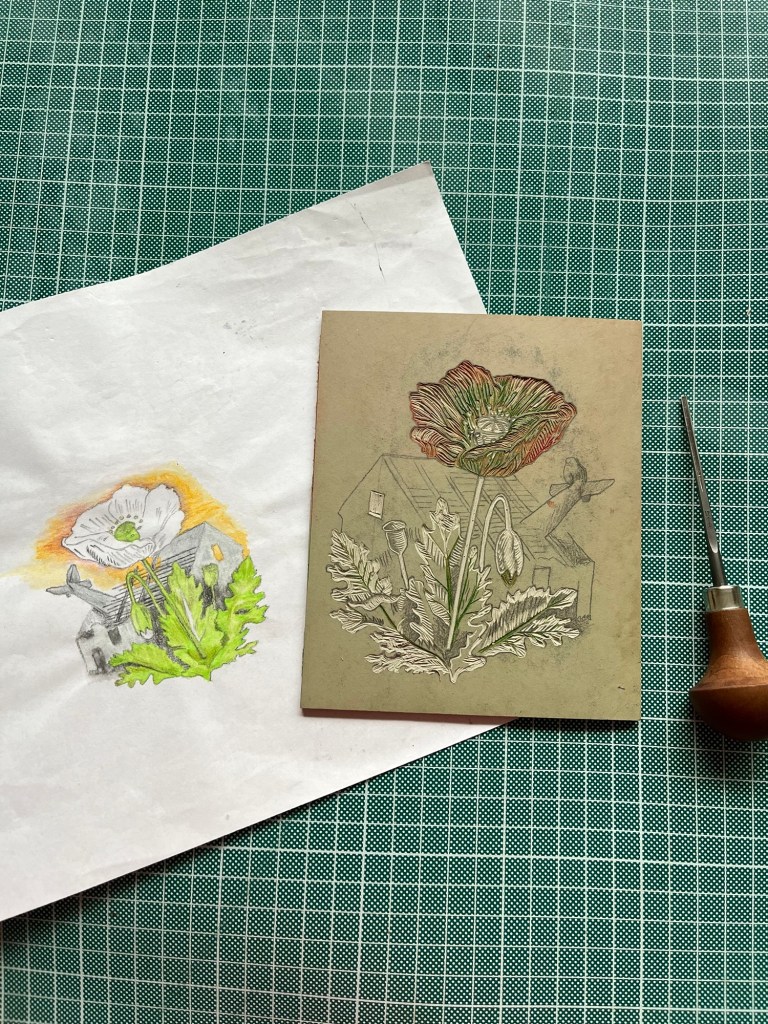
When this lino block was first cut, a long time ago, it was going to be printed in pale subtle colours. Something on the news the other day while choosing inks made me reach for scarlet and emerald green instead.
The block is similar to an unfinished print from even longer ago. As a teenager I liked the idea of nature reclaiming damaged land. Maybe it’s still a nice idea. The white poppy has symbolised pacifism for nearly a century. Weapons are presumably more profitable but mediation and peaceful resolution has a preferable outcome.
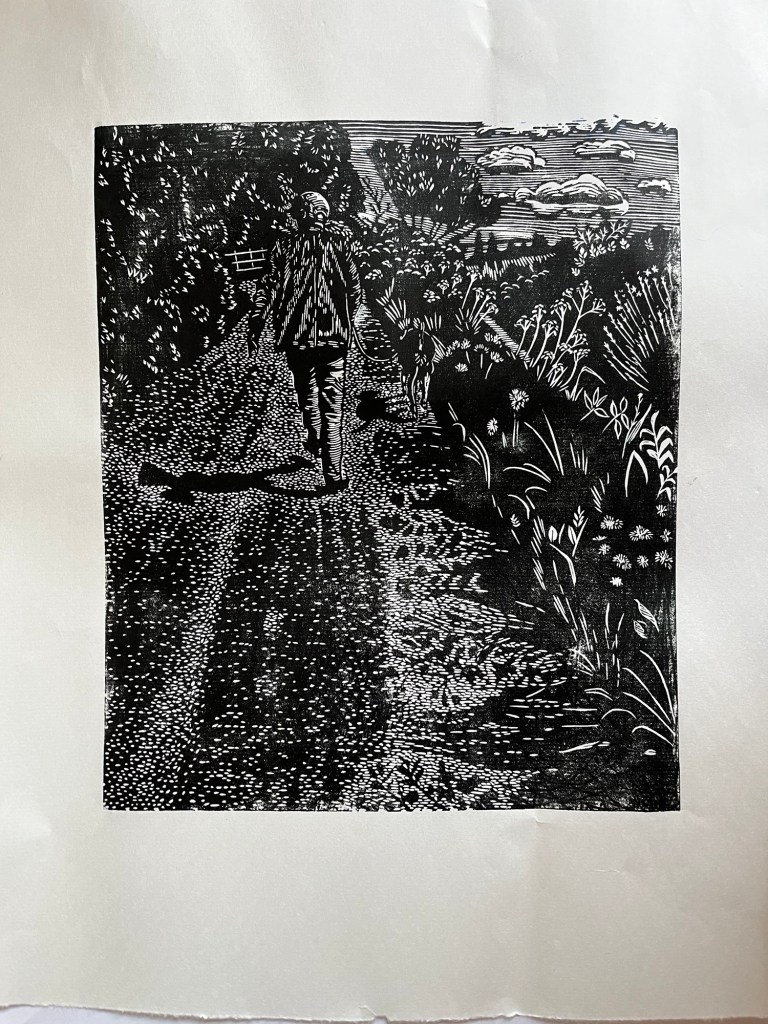
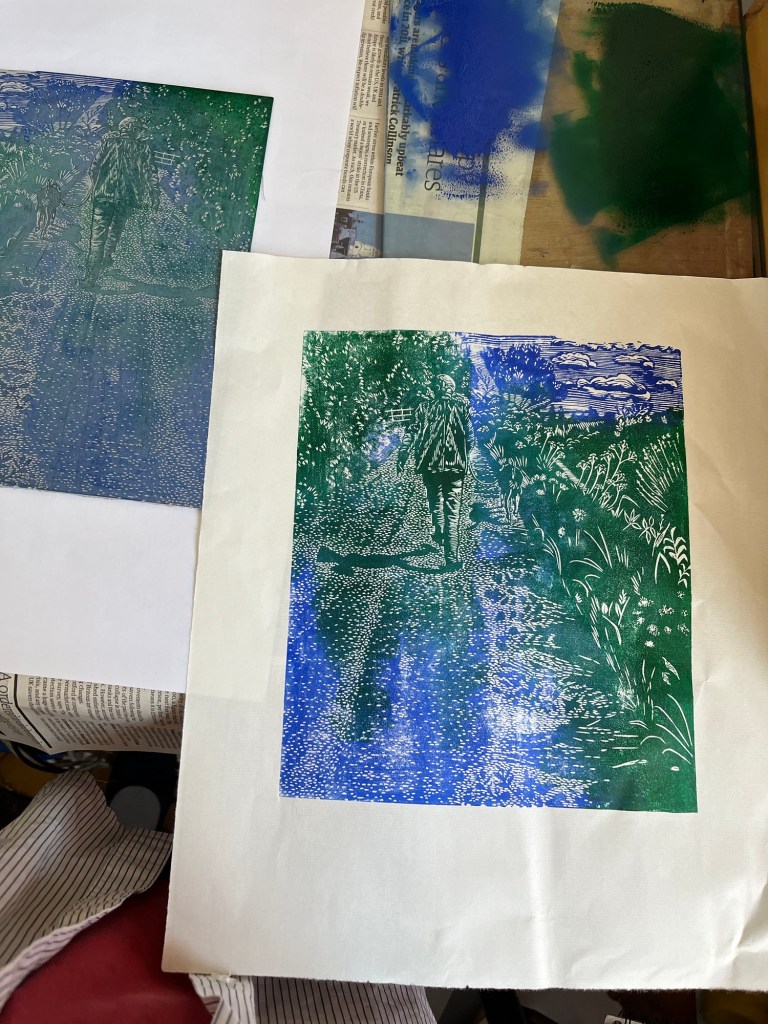
I was watching Jack’s shadow walking in a meadow when the rest of us were all over the pavement. It took a while to get some photos, passing traffic kept hiding the subject.
Walking on water?
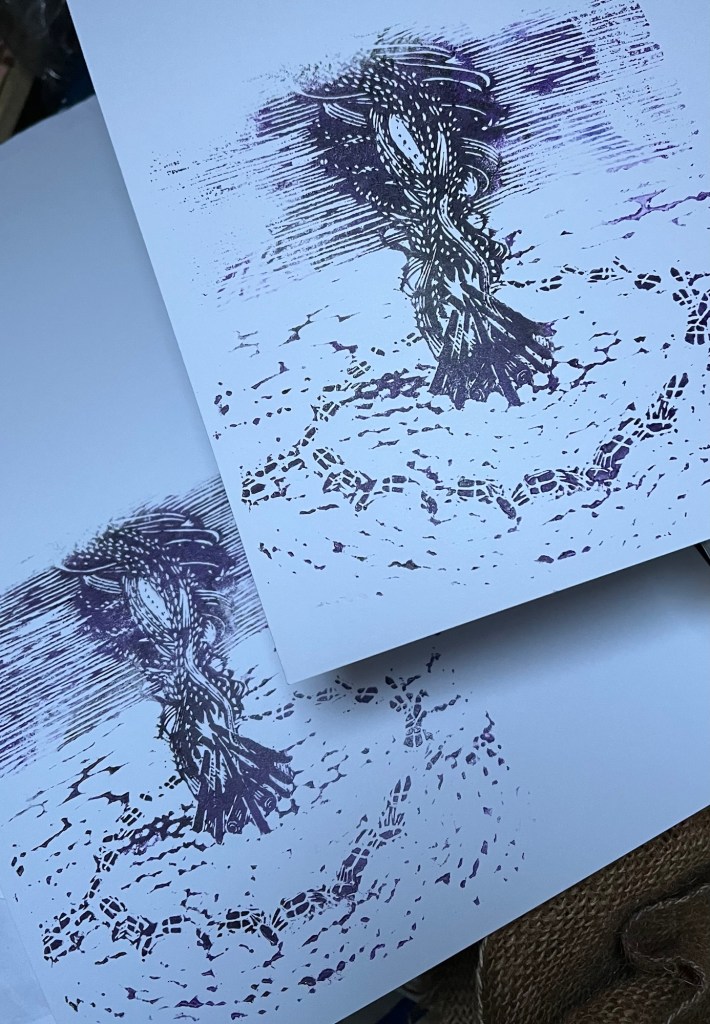
Making test prints on the hottest day of the year isn’t a good idea. I wanted to know if the little dots looked like a road surface, so I began inking quite early. This hasn’t captured the idea I saw while walking, but it’s OK.
I’ve realised it’s now forty years since my art college graduation. There’s a certificate somewhere on the bookshelf that says I have a degree in Fine Art. The certificate doesn’t look like a genuine document so it fits well with my dissertation about art forgery.
“But what is Fine Art?” people ask. No idea, but it’s a term used in frilly lettering outside galleries showing the kind of art that would have been sneered at by any of our tutors. In 1984, anything looking like a craft was discouraged. Printmaking was a grey area, but it was tolerated.
Fine Art printed with linseed ink on paper
For the first few years after graduation I was a member of some printmaking studios. There were group exhibitions and teaching sessions. Then there were the ‘back to work’ schemes. These assumed that all work took place in an office, so there were basic maths and literacy classes. Meanwhile, I missed deadlines for creative opportunities which required proof of concept and skills. Helpful jobcentre ladies would ring prospective employers, saying “She’s got a degree in graphic design!”. When I pointed at my CV (again), they’d say “isn’t that the same thing?”.
During the last four decades I’ve collected a lot of rejection letters. Some of them were quite expensive.